

Chief Revenue Officer (CRO) Program
Invalid liquid data
Invalid liquid data
CRO Program: Lead growth and revenue strategy
AI is reshaping how organizations find, price, and retain revenue, from dynamic pricing and demand forecasting to increasingly autonomous buying journeys. As disruption accelerates, chief revenue officers (CROs) must build resilient revenue systems and lead cross-functional performance. The Chief Revenue Officer (CRO) Program from Wharton Executive Education prepares senior executives to own the end-to-end revenue engine and elevate their impact at the enterprise and board level.
This 10-month Wharton Executive Education program equips you to architect a single, cohesive revenue engine, from pricing and product to AI-driven customer engagement, and lead for the future with confidence and resilience. You will develop the ability to drive data-backed growth, build a culture of innovation, and deliver competitive advantage for lasting business impact.
What will you learn in the CRO Program?
Key program takeaways
The Wharton Chief Revenue Officer Program helps participants strengthen their ability to lead growth, revenue strategy, customer engagement, and AI-enabled business decision making.
Financial value assessment: Evaluate an organization’s financial value and analyze the implications of adopting and implementing new technologies
Growth strategy: Examine organic growth initiatives, including diversification, mergers, and acquisitions, and identify drivers of success or failure
Customer behavior insights: Identify high-impact customer behavior within your organization and evaluate how AI-enabled tools could be used to deliberately influence that behavior
Scaling and growth: Analyze an organization’s current growth and scaling trajectories and discuss processes to support future growth and scale
Revenue analytics and pricing: Explore how AI and revenue analytics support price experimentation, assess willingness to pay, and enable dynamic pricing to inform effective business decisions
Revenue leadership: Present an action plan for generating revenue that synthesizes concepts of growth strategy, revenue management, and product management
Learning journey for the Wharton CRO Program
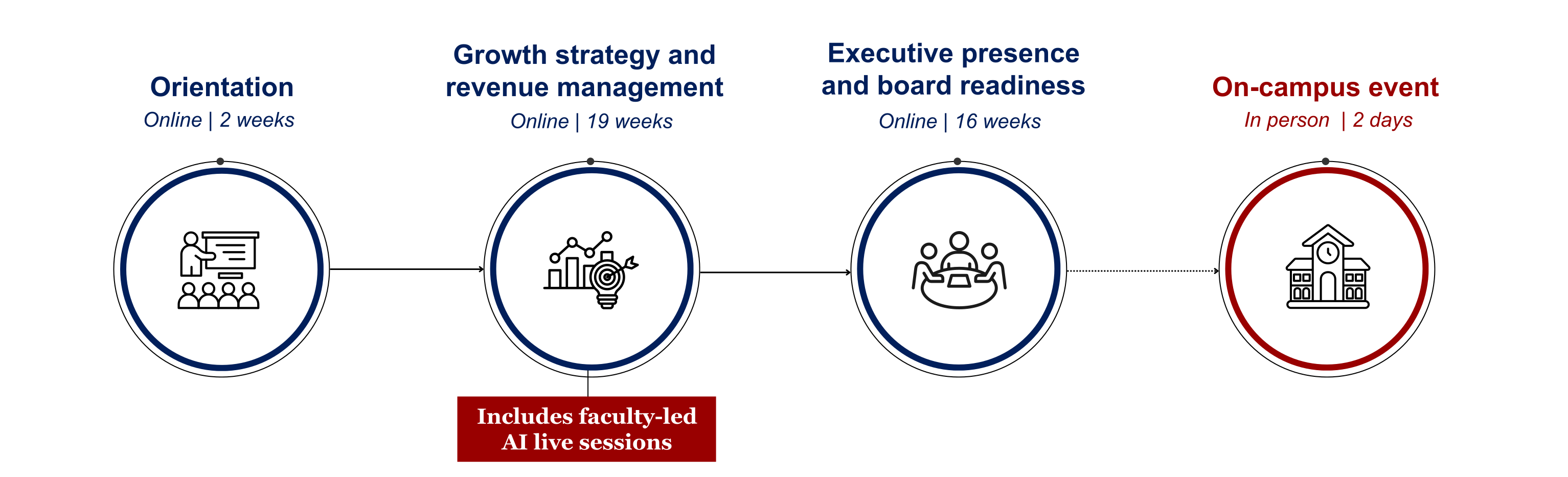
The nine- to 10-month learning journey follows this structure:
Core modules: 19 weeks of online learning across growth strategy, revenue management, pricing, customer engagement, product innovation, and AI-enabled revenue decision making
Required integrated modules: Two integrated modules focused on strategic innovation, executive presence, stakeholder influence, and board readiness
Live faculty-led online sessions: Sessions on AI and Search: From SEO to LLMO, Responsible AI: Ethics, Regulation, and Governance, Measuring Productivity Gains of AI in the Workplace, and Integrating Revenue Strategy and AI Capabilities
Capstone project: Develop a practical road map that applies program concepts to a real-world business challenge within your organization
Optional on-campus event: A two-day recognition and networking event on the University of Pennsylvania campus in Philadelphia
Note: A registration fee of US$250 is applicable for the on-campus event.
How is the CRO Program curriculum structured?
Growth strategy and revenue management | Online | 19 weeks
Build the strategic, analytical, and commercial capabilities needed to drive sustainable growth, strengthen revenue performance, and create long-term business value.
Growth strategy
Evaluate growth opportunities and strategic initiatives using financial, operational, and organizational frameworks that support profitable expansion.
Linking Corporate Strategy and Intrinsic Value – Examine how strategic decisions influence organizational value creation and long-term performance.
Corporate Strategy and Value Creation – Explore the relationship between competitive strategy, growth initiatives, and enterprise value.
Diversifying and Consolidating Corporate Scope – Assess diversification and consolidation approaches to strengthen market position and growth potential.
Modes of Growth – Analyze different pathways to growth, including organic expansion, partnerships, and acquisitions.
Scaling the Organization – Understand the challenges and requirements involved in scaling organizations successfully.
Growth Metrics – Identify and apply metrics that help evaluate growth performance and strategic progress.
Revenue and product management
Explore AI-powered revenue management, pricing, customer engagement, and product innovation strategies that support growth and competitive advantage.
Elements of Revenue Growth – Understand the drivers of revenue generation and how they contribute to business performance.
Introduction to Revenue Management – Build a foundation in revenue management principles and their role in strategic decision making.
The Basics of Willingness to Pay, Demand Estimation, and Pricing – Explore customer value perceptions and pricing approaches that support revenue optimization.
Estimation Challenges in Revenue Management – Examine common challenges in forecasting, estimation, and revenue planning.
Monetizing Scarcity: Dynamic Pricing and Capacity Control – Assess how organizations use pricing and capacity decisions to maximize revenue opportunities.
Evolving Revenue Models – Explore how business models and revenue streams evolve in response to market and technology shifts.
Leveraging Customer Engagement – Understand how customer engagement strategies influence growth, retention, and revenue outcomes.
Customer-Based Products – Examine product approaches that align closely with customer needs and value creation.
Making a Product "Sizzle" – Explore techniques that strengthen product differentiation and customer appeal.
Agile Product Development – Understand agile approaches to product design, development, and continuous improvement.
Note: Session topics are subject to change.
Executive presence and board readiness | 16 weeks
Through two required integrated modules, you will sharpen your leadership voice, influence critical stakeholders and boards, and translate insights into execution across the organization.
Driving Strategic Innovation: Understand how to manage large-scale open-innovation models and apply them to drive initiatives within your organization while developing the confidence to lead at the executive level.
Executive Presence and Influence: Build the ability to shape how you present yourself, strengthen your executive presence through strategic persuasion, and enable meaningful impact in board-level settings.
Note: Short courses are subject to change.
Live faculty-led online sessions
Strengthen your strategic leadership with live, application-focused sessions* that help you navigate the accelerating impact of AI across enterprise models, customer ecosystems, regulatory landscapes, and organizational strategy.
AI and Search: From SEO to LLMO, Kartik Hosanagar
Led by Kartik Hosanagar, this session examines how commerce is shifting as AI systems and autonomous agents research, recommend, and purchase on behalf of consumers and enterprises. It introduces the move from search engine optimization (SEO) to AI engine optimization (AEO) and AI agent optimization (AAO) as well as its impact on brand strategy, data foundations, and go-to-market planning. You will learn how marketing, sales, and customer experience must adapt for a future in which AI guides most purchase journeys.
Responsible AI: Ethics, Regulation, and Governance, Kevin Werbach
Led by Kevin Werbach, this session explores how AI systems are becoming central to enterprise decision making and why leaders must ensure that their use is ethical, transparent, and aligned with emerging regulations. It outlines the foundations of responsible AI governance and how to design oversight, manage accountability, and support innovation responsibly. You will also examine global regulatory approaches to AI and understand the context required to lead adoption in complex, international environments.
Measuring Productivity Gains of AI in the Workplace, Pinar Yildirim
Led by Pinar Yildirim, this session examines how organizations can rigorously assess the impact of AI on workplace productivity and business performance. It explores which metrics truly matter, how to link them directly to AI initiatives, and how to avoid misleading signals that overstate impact. You will learn how to set realistic expectations, design meaningful experiments, and build dashboards that distinguish genuine productivity gains from activity that appears effective but delivers limited value.
Integrating Revenue Strategy and AI Capabilities, Raghuram Iyengar, PhD
Led by Raghuram Iyengar, this session brings together key revenue management concepts from earlier modules and focuses on their application within an organizational context. It introduces a structured approach to assessing challenges across areas that include data, teams, AI, and measurement and examines how revenue strategies can align with AI-enabled capabilities to support evolving business needs.
*Note: Session topics and speakers are subject to change.
Capstone project
The capstone project is part of the program’s comprehensive curriculum, giving you the opportunity to synthesize insights and apply them directly to a real-world challenge. Through a systematic and strategic approach, you will develop a road map guided by strategic vision that can be implemented in your role, enabling you to translate theory into practice and drive change.
Recognition ceremony and networking event (2 days | on campus)
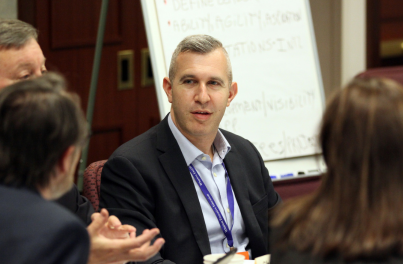
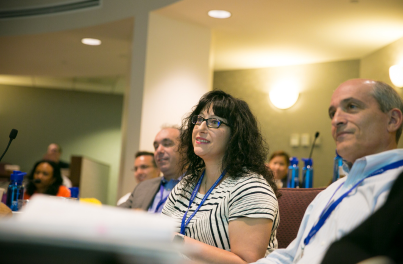
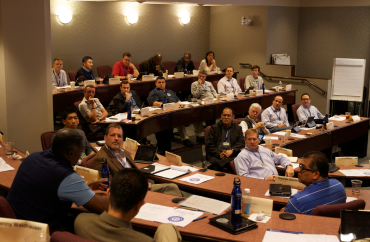
Join an optional two-day recognition ceremony and networking event held on the University of Pennsylvania campus in Philadelphia. This event, conducted once every four cohorts and generally held within six months after completion of the program, provides a unique opportunity to:
Connect with peers: Meet your cohort members and faculty in person.
Expand your network: Engage with professionals from other cohorts, fostering cross-cohort collaboration and learning.
Note: A registration fee of US$250 is applicable for the optional two-day on-campus recognition ceremony and networking event.
Past participants of the CRO Program
The Wharton Chief Revenue Officer (CRO) Program has brought together 750+ participants from diverse backgrounds, industries, and experiences. The cohort environment enables you to learn alongside accomplished peers and gain practical insights to address the challenges faced by their organizations.
Past participants of the CRO Program
Work experience

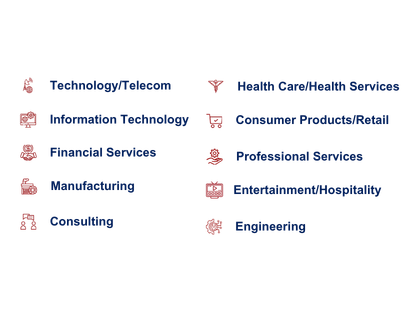
Top industries
Countries

Where past participants of the Chief Revenue Officer (CRO) Program come from







Disclaimer: All product and company names are trademarks or registered trademarks of their respective holders. Use of product and company names does not imply any affiliation with or endorsement by the holders.
The list of companies is only indicative and not exhaustive.
What past participants have to say about the CRO Program
Hear from past participants and faculty


“CROs are the linchpin in determining everything related to organizations' revenues — from articulating the organization's vision and revenue strategy for meeting their goals to deciding which new ventures to put resources into. The Chief Revenue Officer Program will equip you with the skills to value organizations, forecast revenues, introduce new products, and scale new ventures. You will emerge with a strategic vision of the C-suite while having a tactical view of the multiple functions involved in revenue operations.”
— Raghuram Iyengar, PhD
Academic Director for the CRO Program; Miers-Busch, W’1885 Professor; Professor of Marketing; Faculty Director Of Innovation, Experiential Learning, and Research Initiatives, Analytics at Wharton, The Wharton School
How does the CRO Program build AI strategy capabilities?

Technical AI Leadership
Assess how AI systems and autonomous agents interpret information, shape discovery, influence decisions, and impact productivity across enterprise functions.

AI Insights for Strategic Decision Making
Assess ethical and compliant approaches to AI adoption to evaluate risks, design oversight, and connect AI initiatives to measurable business outcomes.

AI Strategy Applications
Explore AEO and AAO, identify high-impact customer behavior, and evaluate how AI-enabled capabilities can influence that behavior. Prepare your data, processes, and customer functions for AI-mediated environments.

Expert-Led AI Sessions
Engage in live sessions on AI-mediated markets, responsible AI governance, and performance measurement. Examine how AI systems research, recommend, transact, and drive real productivity impact.

AI discussion boards
Engage in AI discussion boards across modules to connect with peers and share tools, prompts, and experiences. These discussions provide an opportunity to expand your AI library with practical inputs that may be useful across different contexts.
What are the program highlights of the CRO Program?

Live sessions
Experience self-paced online and live online sessions with faculty and periodic guest lectures from industry leaders.

World-renowned faculty
Glean insights from renowned faculty and industry experts who are at the cutting edge of innovation.

Success coach
Craft your learning journey in line with your career goals with a success coach assigned to your cohort.

Pathway to alumni status
Following the successful completion of the program and subsequent open-enrollment programs, subject to further qualification criteria and additional tuition, you have a pathway to apply for Wharton alumni status.

Self-paced learning
Learn at your own pace with a weekly commitment of three to five hours of sessions and activities.

Global peer group
Network with accomplished and like-minded peers from around the world to assimilate diverse experiences and gain new approaches to growth strategy.

Try-It activities and capstone project
Engage in reflection exercises and try-it activities to think critically and strengthen your strategic approach, and apply your learning through a capstone project designed to support on-the-job application.

On-campus networking
Meet peers from multiple cohorts, industry experts, and faculty during an optional two-day on-campus networking event.
Who is the CRO Program for?
Current and aspiring CROs | Create new revenue streams, optimize investments, and achieve ambitious revenue targets. |
Business-function heads, including VPs of sales, marketing, or customer success | Broaden impact, align sales with customer strategy, and develop a toolkit of revenue growth strategies and tactics. |
C-suite leaders preparing to transition into the CRO role | Develop leadership skills to integrate functions, lead cross-functional teams, and drive revenue excellence. |
Participants are required to have:
A minimum of 10 years of work experience
Fluency in written and spoken English
Who teaches the CRO Program?

Raghuram Iyengar, PhD
Academic Director for the CRO Program; Miers-Busch, W’1885 Professor; Professor of Marketing; Faculty Director of Innovation, Experiential Learning and Research Initiatives, Analytics at Wharton, The Wharton School

Gad Allon, PhD
Jeffrey A. Keswin Professor; Professor of Operations, Information and Decisions, The Wharton School; Director of the Jerome Fisher Program in Management and Technology, The University of Pennsylvania

David Wessels, PhD
Adjunct Professor of Finance; Director of Executive Education, The Wharton School

Emilie R. Feldman, PhD
Michael L. Tarnopol Professor; Professor of Management, The Wharton School

Noah Gans, PhD
Anheuser-Busch Professor of Management Science; Professor of Operations, Information and Decisions, The Wharton School

Senthil Veeraraghavan, PhD
Panasonic Professor of Manufacturing and Logistics; Professor of Operations, Information and Decisions, The Wharton School

Karl Ulrich, ScD
CIBC Endowed Professor; Professor of Operations, Information and Decisions; Professor of Management; Dean’s Office Advisor on Asia Strategy, The Wharton School
What credentials and outcomes will you gain from the CRO Program?
Pathway to Wharton alumni status
For more than 135 years, Wharton has been the place where visionaries, inventors, and trailblazers get their start. After completing the CRO Program and subsequent open-enrollment programs, subject to further qualification criteria and additional tuition, you have a pathway to apply for Wharton alumni status.
Executives who successfully complete the CRO Program have the option of applying to the General Management Program (GMP). The GMP provides further opportunity to enhance your leadership skills and business acumen with a flexible curriculum. The CRO Program provides one credit toward the six required to complete the GMP and earn alumni status. More details on the GMP are available at Wharton Executive Education.
Upon qualifying for Wharton alumni status, you will be eligible to receive:
Full access to become a member of 77+ Wharton alumni clubs
Invitation to attend future Wharton global alumni forums
A Wharton email address
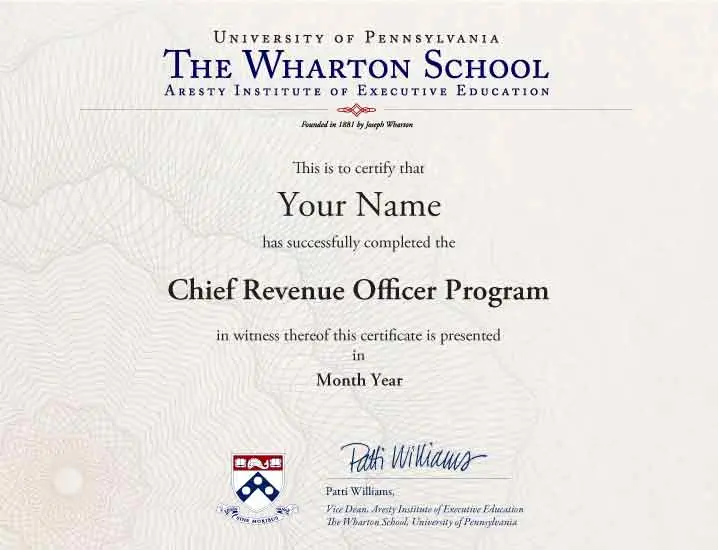
Certificate of completion
Earn a Wharton Executive Education digital certificate upon successful completion of the program. Participants of the program get exclusive access to a wide range of professionals, events, and networking opportunities. Furthermore, you can also benefit from additional tuition assistance upon enrolling in further online electives from Wharton Executive Education.
Note: After successful completion of the program, your verified digital certificate will be emailed to you in the name you used when registering for the program. All certificate images are for illustrative purposes only and may be subject to change at the discretion of the Wharton School.
FAQs
Why Wharton Executive Education?
Wharton Executive Education delivers research-driven programs that prepare executives to address complex challenges and lead with confidence. Its faculty bring deep expertise in revenue management, pricing, product innovation, and analytics through their research and advisory work. Participants gain insights across growth strategy, customer engagement, and cross-functional collaboration to strengthen decision making and drive business outcomes.
What does it take to be a chief revenue officer?
The path to becoming a chief revenue officer can begin in many senior roles, whether leading sales, marketing, customer success, or other revenue-impacting functions. What matters is developing the strategic vision and the ability to align teams around a revenue strategy. The Wharton CRO program builds on this foundation with a comprehensive curriculum that blends growth strategy, revenue management, and customer management. Through faculty insights, global peers, and a capstone project, executives gain the frameworks and practical experience to overcome business challenges and achieve ambitious revenue targets.
What degree do you need to be a CRO?
Chief Revenue Officers come from diverse educational paths, including business, finance, marketing, and related fields, often complemented by leadership development. What defines success in the role goes beyond having a specific degree and is built on the ability to shape revenue strategies and inspire cross functional teams. The Wharton CRO program builds this expertise through a comprehensive curriculum on growth strategy, revenue management, and customer strategy, supported by live online classes with world-class faculty, and networking with global peers, which enables executives to achieve sustainable growth and long-term impact.
How can you become a CRO?
There are many pathways to becoming a chief revenue officer. Executives often advance through senior roles in sales, marketing, customer success, or other revenue-generating functions. Success comes from developing the strategic vision and the ability to align sales and customer strategy across cross functional teams. The Wharton CRO program supports this journey by offering a comprehensive curriculum on growth strategy, revenue and customer management, equipping leaders to address challenges and achieve ambitious revenue targets.
Do CRO programs provide training?
CRO programs provide training-like preparation by combining structured frameworks, faculty expertise, and real-world application. Participants often work with case studies, revenue scenarios, and peer discussions to strengthen strategic decision-making. The Wharton CRO Program builds on this approach with a comprehensive curriculum, which includes live online sessions, hands-on assignments, and a network of peers that develops the expertise to align cross functional teams, manage the customer strategy, and drive long-lasting impact.
What are CRO programs?
Chief revenue officer (CRO) Programs are executive learning journeys designed to prepare leaders to manage and integrate all revenue-related functions, from sales and marketing to customer success and pricing. They focus on growth and customer strategy, and revenue targets. The Wharton Chief Revenue Officer (CRO) Program blends growth strategy, revenue management, and cross functional leadership to help executives strengthen their organizational revenue strategy and drive long-term business excellence.
I have a full-time job. What is the time commitment expected from me?
The CRO Program has been designed with your busy schedule in mind. You will be required to commit not more than three to five hours per week, enabling you to benefit from this transformative program while fulfilling your day-to-day work responsibilities. The impactful program offers a blend of self-paced modules and live interaction.
How do the live sessions work?
The 10-month learning journey includes live online and video online sessions with renowned faculty, industry experts, and global peers. You can take advantage of weekly live sessions and the Slack channel to ask questions and discuss ideas with your cohort success coach and participants. Real-world examples and a debrief of the program learnings are delivered through a combination of recorded video and live online lectures. The program concludes with a two-day on-campus recognition ceremony and networking event on the Wharton Executive Education campus in Philadelphia.
Does the program grant Wharton alumni status?
While the program does not grant alumni status or alumni benefits, it opens up a unique pathway to apply for the prestigious Wharton alumni status upon further qualification criteria and additional tuition. As a participant of this transformative program, you get exclusive access to a wide range of professionals, events, and networking opportunities. You can also benefit from additional tuition assistance upon enrolling in further online electives from Wharton Executive Education.
What is included in the price of the program?
The program fee covers teaching fees, all academic material, and access to online coursework. The fee does not include the registration fee of US$250 for the optional two-day on-campus networking and recognition ceremony, accommodation expenses for the on-campus event, travel expenses (domestic and international, including visa fees), and any other expenses not specifically mentioned in the program fees.
Is there any discount or financial aid?
You can pay the full program fee upfront or pay in easy installments. If you apply well in advance of the program start date, you can receive a fee benefit. If you would like to approach your company with a sponsorship request for this program, here is a customizable template that you can use.
Does the program offer closed captioning for videos included in the curriculum?
Yes. Closed-captioning and transcripts for all pre-recorded videos as well as closed-captioning for recordings of live sessions is available.
Who will be collecting the payment for the program?
Emeritus collects all program payments, provides learner enrollment and program support, and manages learning platform services.
What is the program refund and deferral policy?
For the program refund and deferral policy, please click the link here.
Are there any restrictions on the types of funding that can be used to pay for the program?
Program fees for Emeritus programs with Wharton Executive Education may not be paid for with (a) funds from the GI Bill, the Post-9/11 Educational Assistance Act of 2008, or similar types of military education funding benefits or (b) Title IV financial aid funds.
How does Emeritus support accessibility for learners?
Emeritus is committed to making high-quality education accessible and affordable to individuals, companies, and governments around the world. If you have questions about accessibility or would like to discuss available support options before enrolling, please contact accessibility@emeritus.org. For more information about our accessibility practices, please review our Accessibility Policy here.
Connect with a program advisor for a 1:1 session
Our program advisors have helped senior executives across the world choose the right program for their career goals. Schedule a 1:1 to get a deeper understanding on why the CRO Program is the right fit for you.
Email: wharton_cro@emeritus.org
Phone: +1 561 486 7448 (U.S.) / +44 1135 191350 (U.K.) / +971 80 0088601095 (U.A.E.) / +52 55970 90243 (LATAM)
Early applications are encouraged. Admissions are reviewed on a first-come, first-served basis.
Flexible payment options available.
Starts On