

Chief Technology Officer (CTO) Program
Invalid liquid data
Invalid liquid data
Program overview: The CTO Program
The Chief Technology Officer (CTO) Program from Wharton Executive Education equips senior technology leaders and aspiring CTOs to align innovation with business strategy and lead enterprise transformation. In a business economy that’s rapidly changing with emerging technologies and artificial intelligence, the CTO must act as both strategist and change agent, driving sustainable growth and competitive advantage for their organizations.
Led by Wharton’s world-renowned faculty, this 9- to 12-month program combines technology strategy, emerging trends, and execution frameworks with customizable electives. You emerge with the strategic insight, leadership mindset, and advanced tools to champion innovation, scale technology solutions, and shape the future of your enterprise.
Learning Journey
The Wharton CTO Program is designed with the needs of busy executives in mind. You will learn through online sessions, including fireside chats and guest lectures from leading researchers and global industry leaders. The flexible format of the CTO Program allows you to customize your learning journey for maximum career and business impact.

Note: A registration fee of US$250 is applicable for the on-campus event.
What you will learn in the CTO Program
The CTO Program will enable forward-thinking executives like you to learn from a cutting-edge curriculum that reflects current industry trends. The program is organized into two components — 18 weeks of core modules followed by three online electives of six weeks each. The program’s core modules are divided into three overarching pillars — Technology Strategy; Trends in Technology; and Tools, Techniques, and Execution. Led by esteemed Wharton faculty and industry experts who are at the cutting edge of innovation, the CTO Program prepares you to be a strategic CTO capable of bringing about transformative change.
Build a strategic mindset to respond to change and drive technological advancements in your organization.
Module 1: CTO Strategic Mindset: Responding to Change and Creating Change
Gain a foundational overview of the CTO’s roles and responsibilities, emphasizing the strategic mindset required to navigate and drive change. Explore why some organizations thrive and others fail as well as ways to manage the changes all organizations must undergo to survive and excel.
Module 2: Frameworks and Building Blocks
Discuss how an organization's strategy can directly influence the probability of success in creating value. Analyze how technological changes impact existing organizations while creating opportunities for new entrants into the market, and discuss the importance of social networks and the roles they play in helping organizations achieve their goals and drive innovation.
Module 3: Generating and Evaluating Commercial Ideas
Immerse in ideation, corporate scaling, hypothesis formulation, and judo strategy while considering a hypothetical initiative to implement artificial intelligence (AI) into your organization.
Module 4: Entry Strategies
Explore the tools to craft effective market entry strategies; the three core market entry strategies, value chain (cooperation), disruptive, and blue ocean, and how speed and depth of market penetration are critical factors in determining the success or failure of a product launch.
Module 5: Strategic Adaptation and Renewal
Discuss how disruptive technologies are both a threat to the existing market players and an opportunity to shift the market or create new markets. Explore how organizations can adapt to these changes, strategically manage disruptions, and even become the creators of disruptive technologies.
Module 6: Ecosystems
Explore the concept of ecosystems, their unique dynamics, and their roles in successful organizations. Understand how disruptive technologies can simultaneously emerge within an ecosystem, how ecosystems operate, their impact on technological innovation, and strategies for leveraging them to drive organizational success.
Note: Module topics are subject to change.
Explore emerging technologies, AI/ML advancements, blockchain, and global technology trends that are shaping industries.
Module 7: Artificial Intelligence and Machine Learning
Examine the concept and value of machine learning (ML) and how its application can significantly disrupt the status quo in almost every industry. Discuss the critical elements of data, the algorithmic predictions made using data, and how to teach an algorithm to make progressively better decisions, gaining knowledge to begin leveraging ML as a tool for innovation and disruption in your industry.
Module 8: The AI Stack and Competitive Implications
Gain insights into how AI can be strategically implemented to address organizational goals while considering competitive and economic implications. Delve into the evolving dynamics of the AI industry and how organizations can navigate challenges to gain a competitive edge.
Module 9: Blockchain and Cryptocurrencies
Understand the nuances of blockchain technology and its close association with cryptocurrencies. Explore how organizations can leverage blockchain and cryptocurrencies to innovate, disrupt, and add value while also examining the potential challenges and limitations of these technologies.
Module 10: Technology Policy
Focus on the evolving role of big technology in society; critical issues surrounding data privacy, regulation, and compliance; and effective compliance strategies to mitigate data privacy risks. Explore the most widely adopted best practices and standards that organizations use to navigate global data laws and regulations. Gain a deeper understanding of cyber law and the key compliance issues that modern technology leaders must address.
Module 11: Global Technology Trends
Understand how global technology trends influence organizational strategy and competitiveness, assess the role of intellectual property and talent clusters in your own industry, and discuss the role that migration patterns play in driving innovation and attracting foreign investment.
Module 12: Environmental, Social, and Governance (ESG) Essentials for a New Business Era
Examine how ESG factors influence an organization's trajectory and how misalignments can lead to significant challenges and reputational risks. Equip yourself with a solid understanding of how to assess, implement, and integrate ESG strategies within your organization to ensure long-term success and sustainability.
Note: Module topics are subject to change.
Gain practical insights into implementing technology strategies, managing innovation, and scaling your organization’s technological infrastructure.
Module 13: Scaling
Discuss how early-stage organizations eventually face limitations as growth demands more formal processes and structure, and assess an organization’s readiness for scaling, emphasizing the importance of aligning the market and the product. Get equipped with the tools to manage scaling challenges effectively and make informed decisions to support long-term organizational growth.
Module 14: Metrics
Discuss the framework for determining an organization’s readiness and ability to scale. Establish the metrics that must be in place both before and after scaling to ensure the organization’s expansion is not only successful but, more importantly, sustainable.
Module 15: Leading Innovation
Explore the dynamics of innovation and how organizations can harness it to create value. Gain insights into the strategic decisions organizations must make when deciding to enter new markets or create entirely new solutions, and how these decisions align with innovation horizons.
Module 16: Process View of Innovation and Innovation Tournaments
Discuss how organizations must innovate their processes around innovation management and create a repeatable sequence while remaining focused on creating a new or novel approach, which is at the heart of innovation. Explore the concept of Innovation Tournaments, where multiple ideas are proposed, tested, and rated to determine which innovations should move forward.
Module 17: The CTO Perspective: Balancing External and Internal Modes of Innovation
Explore the dynamic relationship between innovation, competition, and collaboration within an organization’s growth strategy. Gain insights into how organizations can strategically balance internal innovation management with external partnerships to maximize growth and sustainability.
Module 18: Accessing New Technologies and Platforms through Acquisitions
Delve into the strategic role of acquisitions in accessing new technologies and platforms, with a focus on how organizations can leverage acquisitions to extend their market footprint and foster growth. Explore the nuances of acquisitions and alliances, understanding their impact on both the acquiring and the acquired organizations.
Note: Module topics are subject to change.
Technology Acceleration Program: Understand emerging technologies, such as ML and AI, and explore their implications for various industries while you evaluate the growth potential of disruptive technologies.
Driving Strategic Innovation: Leading Complex Initiatives for Impact: Prepare yourself to create and execute a well-developed innovation strategy that ensures your organization can meet the challenges of today and the future.
Product Management and Strategy: Gain a comprehensive understanding of cutting-edge product management techniques, along with strategies for implementing them, which will give your organization a competitive edge.
Leading a Technology-Driven Organization: Explore an outside-in approach to leadership that is particular to tech-driven companies by thinking like a customer, and meet the demands of the marketplace.
Executive Presence and Influence: Persuasive Leadership Development: Gain the skill set needed to have an impactful executive presence through strategic persuasion and craft your unique leadership style.
Corporate Governance: Maximize Your Effectiveness in the Boardroom: Gain a deeper understanding of corporate governance and increase your impact on board-level decisions by understanding the role, structure, and responsibilities of corporate governance.
M&A and Corporate Development Strategies: Gain the skills to tackle the entire life cycle of a deal-making process, including corporate development strategy, M&A decisions, due diligence, divestitures, and negotiation strategies.
*Electives are subject to change.
As part of the CTO Program, you will engage in case study discussions and explore real-world applications of cutting-edge research through live online sessions led by Academic Director Lori Rosenkopf. Gain valuable insights into industry challenges and opportunities, with a focus on emerging technologies, digital transformation, and innovation.
Case Study 1: Deloitte Pixel -
Discuss ambidextrous organizations, disruption, and change management as key to unlocking technology's value.
Case Study 2: Online Education in Elite Business Schools -
Understand approach to buy, borrow, or build when it comes to entering new markets/implementing new technologies.
Research Applications Deep Dive -
Explore the impact of networks, mobility, and influence in tech-driven industries.
In addition to the core curriculum, the CTO Program features a series of live online sessions dedicated to the latest trends in artificial intelligence (AI) and machine learning (ML). With a special focus on emerging technologies like generative AI (genAI), these online sessions provide cutting-edge insights and practical applications to help you leverage these technologies effectively in your organization. Join industry leaders and experienced faculty for in-depth discussions and thought-provoking lectures on how AI/genAI is enhancing productivity and customer experience and how ML is transforming industries by enabling strategic decision making, automating complex processes, fostering responsible innovation, and driving ethical governance. The online sessions are designed to help participants like you stay ahead in the fast-evolving technological landscape and gain practical AI/ML skills.
Generative AI: Capabilities, Risks, and Use Cases
Explore how AI and ML can drive strategic decision making, optimize business processes, and unlock new opportunities for growth.
Agentic AI and the Future of Autonomous Technology
Understand how professionals are leveraging emerging technologies like AI, genAI, and ML to reshape workforce dynamics, adapt to big data-driven processes, and foster innovation, redefining the human-AI collaboration frontier.
Responsible AI: Ethics, Regulation, and Governance
Dive into the evolving regulatory landscape of AI, discussing key laws, governance frameworks, and strategies for implementing responsible AI practices.
The AI Stack Ecosystems
Explore how chips, cloud infrastructure, foundation models, and applications form the AI stack, shaping the opportunities and constraints of generative AI. Gain strategic insights into the interdependencies driving innovation and the leadership strategies needed to stay competitive.
AI Strategy and Enterprise Integration
Align AI initiatives with business goals and human–AI collaboration. Mitigate risks such as hallucination and deskilling while bridging AI’s technical potential with practical implementation.
Note: Topics and the schedule are subject to change.
Recognition ceremony and networking event (two days | on campus)
Meet your cohort peers and faculty in person on the University of Pennsylvania campus in Philadelphia at an optional two-day recognition ceremony and networking event*. This event takes place once every four cohorts. It gives you the opportunity to network with not just your peers but also professionals from other cohorts.
*A registration fee of US$250 is applicable.



The CTO Program: Strategy. Technology. Transformation

Explore real-world case studies from Deloitte Pixel and online education in elite business schools that demonstrate how technology capabilities evolve from pilots to scalable systems, strengthening performance and competitive advantage.

Build, integrate, and scale AI solutions responsibly across the enterprise. Deepen your understanding of large language models, agentic systems, and the evolving AI stack through practical insights from expert-led live sessions.

Lead AI transformation through expert-led live sessions on Generative AI, Agentic AI, Responsible AI governance, the AI Stack Ecosystem, and AI Strategy and Enterprise Integration. Strengthen trust, fairness, and collaboration across human–AI workflows.

Leverage emerging technologies to strengthen competitive advantage and drive innovation across markets and ecosystems. Explore the program modules to understand how CTOs evaluate and scale technological innovations to meet organizational goals.
Inside Wharton: Where ambitious leaders become strategic visionaries
Hear from Wharton faculty and alumni as they share how the senior executive programs transform ambition into lasting impact, combining depth, rigor, global perspective, and high-caliber networking opportunities that define learning at the highest level.

Past participant profiles
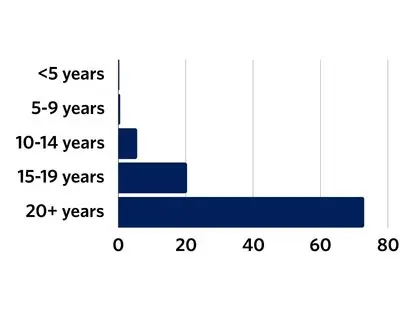
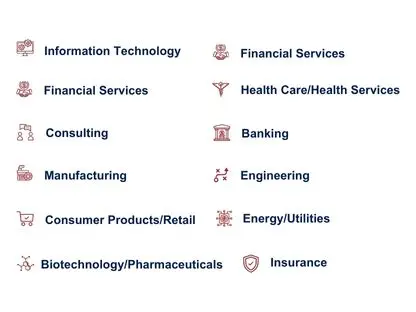
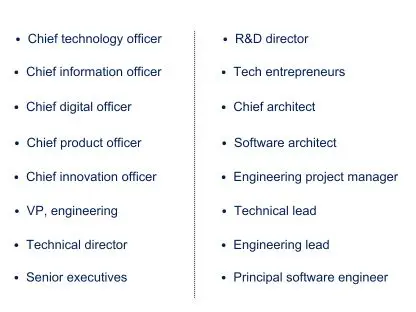
The Wharton Executive Education CTO Program attracts individuals who have diverse backgrounds, come from different industries, and bring unique experiences. The inclusive nature of the cohort ensures that you engage with like-minded peers and gain valuable insights to address the challenges faced by your organization.
Past participants till date

Work experience
Top industries
Top roles
Countries

Where past participants come from










Disclaimer: All product and company names are trademarks or registered trademarks of their respective holders. Use of product and company names does not imply any affiliation with or endorsement by the holders.
The list of companies is only indicative and not exhaustive.
What past participants say about the Chief Technology Officer (CTO) Program


Wharton's Chief Technology Officer Program equips leaders with expertise in technology strategy, trends, and execution. The customized learning journey is tailored for senior executives to evaluate technology trends, hone strategic acumen, and determine the most efficient ways to address the role of a CTO.

Who is the CTO Program for?
The Wharton Executive Education CTO Program is designed for senior technology leaders aiming to elevate their strategic technology leadership and expand their influence from technical oversight to enterprise-wide strategy. It is ideal for:
Current and aspiring CTOs and senior executives with experience in technology management who aim to lead the technology strategy of a company
VPs of engineering, software architects, or those responsible for evaluating and implementing new systems
Senior technology executives tasked with developing strategy or identifying and implementing new technologies
Participants are required to have:
A minimum of 10 years of work experience
Fluency in written and spoken English
Program highlights

Customize your learning journey with a choice of electives in topics aligned with your career goals.

Learn at your own pace with a weekly commitment of three to five hours of sessions and activities.

Glean insights from renowned Wharton faculty and industry experts who are at the cutting edge of innovation.

Network with accomplished peers from around the globe and gain new approaches to strategic technology leadership.

Engage with your success coach to craft your learning journey through regular check-in sessions.

Benefit from experiential sessions combining theory with case studies on real-world technology challenges and apply learnings.

Meet peers from multiple cohorts and faculty during the optional two-day on-campus networking event.

Following successful completion of the program and subsequent open-enrollment programs, subject to further qualification criteria and additional tuition, you have a pathway to apply for Wharton alumni status.
Executive reflection
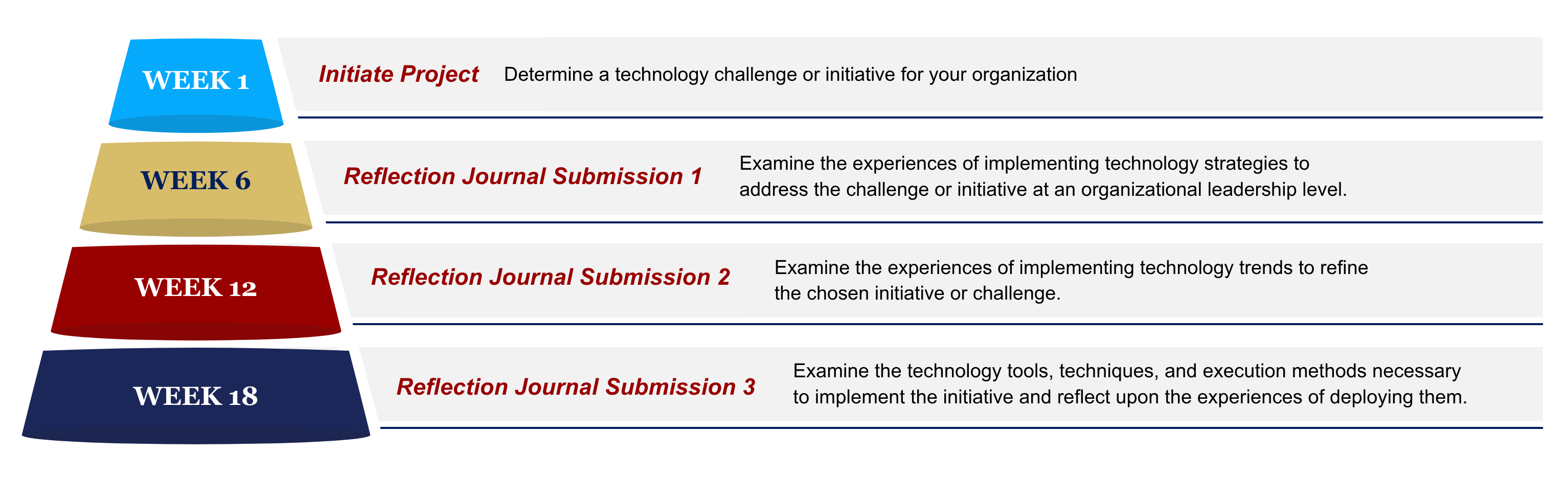
Over the course of the CTO Program, you will work on a reflection journal by leveraging program insights and apply them to analyze challenges in your current or previous organization. For the executive reflection, you will select an issue currently confronting your organization and develop a set of potential solutions to remedy the situation. You can take advantage of weekly live sessions and the Slack channel to ask questions and discuss ideas with your success coach and cohort peers.
At the end of the program, you will make a final presentation, which will be a valuable asset when proposing initiatives to decision makers in your organization.
There are three reflection journal submissions in total — one at the end of each phase:
Pathway to Wharton alumni status
For more than 135 years, Wharton has been the place where visionaries, inventors, and trailblazers get their start. After completing the CTO Program and subsequent open-enrollment programs, subject to further qualification criteria and additional tuition, you have a pathway to apply for Wharton alumni status.
Executives who successfully complete the CTO Program have the option of applying to the General Management Program (GMP). The GMP provides further opportunity to enhance your leadership skills and business acumen with a flexible curriculum. The CTO Program provides one credit towards the six required to complete the GMP and earn alumni status. More details on the GMP are available at Wharton Executive Education.
Upon qualifying for Wharton alumni status, you will be eligible to receive:
Full access to become a member of 77+ Wharton alumni clubs
Invitation to attend future Wharton global alumni forums
A Wharton email address
Meet the faculty
World-renowned Wharton faculty in the CTO Program will prepare modern technology leaders to face a wide array of challenges. You will leverage their insights and domain expertise to better understand your business and industry and immediately apply the learnings to your organization.

Academic Director for the CTO Program, Wharton Executive Education; Simon and Midge Palley Professor; Professor of Management; Vice Dean of Entrepreneurship, The Wharton School

Jeffrey A. Keswin Professor; Professor of Operations, Information and Decisions; Director, Jerome Fisher Program in Management & Technology, The Wharton School

Richard A. Sapp Professor; Professor of Management, The Wharton School

Deloitte & Touche Professor of Management; Faculty Co-Director, Political Risk & Identity Lab; Founder, Wharton ESG Analytics Lab, The Wharton School

Max and Bernice Garchik Family Presidential Professor of Management, The Wharton School

Professor of Management, The Wharton School

Mack Professor; Professor of Management; Co-Director, Mack Institute for Innovation Management; Wharton School Faculty Director for the Huntsman Program in International Studies and Business, The Wharton School

Professor of Operations, Information and Decisions, The Wharton School

CIBC Endowed Professor; Professor of Operations, Information and Decisions; Professor of Management, The Wharton School

Professor of Legal Studies & Business Ethics, The Wharton School
Certificate
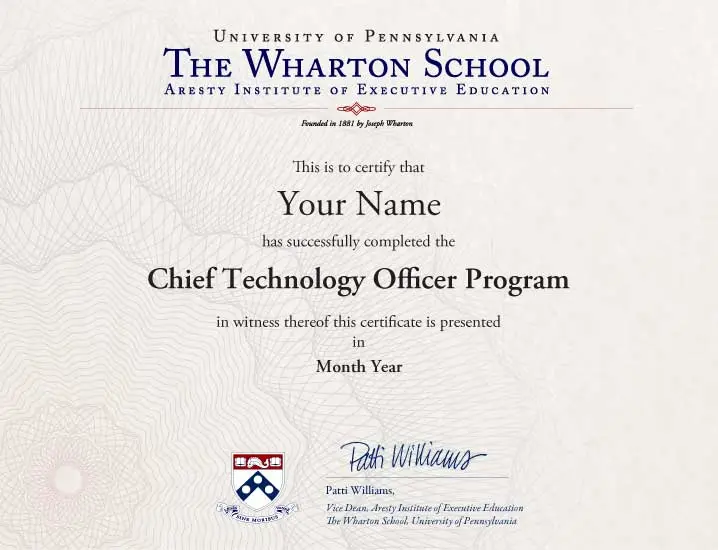
Earn a Wharton Executive Education digital certificate upon successful completion of the CTO Program. As a past participant of this transformative program, you get exclusive access to a wide range of professionals, events, and networking opportunities. Furthermore, you can also benefit from additional tuition assistance upon enrolling in further online electives from Wharton Executive Education.
Note: After successful completion of the program, your verified digital certificate will be emailed to you in the name you used when registering for the program. All certificate images are for illustrative purposes only and may be subject to change at the discretion of the Wharton School.
Please also note that participation in the Chief Technology Officer (CTO) Program (a) will not result in a degree from, alumni status with, or earned credit at the University of Pennsylvania or the Wharton School (or, to Wharton’s knowledge, any other institution), (b) will not be recorded on a University of Pennsylvania or Wharton transcript, and (c) does not guarantee or suggest that a participant will be admitted to the University of Pennsylvania, the Wharton School, or to any other university or institution.
FAQs
The Wharton Chief Technology Officer (CTO) Program is an executive learning journey that helps senior technology leaders move beyond technical oversight into enterprise technology strategy. The CTO Program blends trends and strategies on emerging technology, as well as execution frameworks to prepare leaders for enterprise-wide impact.
Whether a CTO program is worth it depends on your career stage, leadership aspirations, and organizational responsibilities. For senior technology executives seeking to drive emerging technology strategies, scale innovation, innovation management and lead digital transformation, Wharton’s Chief Technology Officer Program offers structured frameworks, faculty expertise, and a global peer network to accelerate enterprise leadership.
The best CTO course will vary depending on your career goals, course design, and the outcomes you value most. You can choose a relevant course by considering factors such as faculty reputation, curriculum focus, and networking opportunities. Wharton’s Chief Technology Officer Program is built around strategy, emerging technology, and execution, combining world-class faculty with a cohort of global leaders to drive enterprise technology and digital transformation. While not a training course in the conventional sense, it offers industry examples, case studies, and interactive discussions that provide training-like preparation for senior technology leadership roles.
The value of the Wharton Chief Technology Officer Program depends on your career stage and the impact you want to create. For senior technology leaders seeking to move from operational oversight to enterprise-wide strategy, the program’s 9- to12-month curriculum, taught by Wharton faculty, blends strategy, emerging technologies, and leadership development with a global peer cohort—delivering both immediate application and long-term career relevance.
The fee for the Wharton Chief Technology Officer Program can be found on the program page. This fee covers academic content, online coursework, and faculty interaction. Travel, accommodation, and the optional on-campus networking event fee are additional. Flexible payment options and early application benefits may also be available for participants.
A CTO course can speed up your progression by adding strategic frameworks, perspective, and a strong network to your on-the-job experience. Many CTOs transition from senior engineering or product roles over time. Taking a course like Wharton’s Chief Technology Officer Program can help accelerate this path, equipping you with strategic frameworks, global networks, and practical training through case studies and industry applications that prepare you for enterprise-level responsibilities.
A chief technology officer typically advances through senior roles where technology and business strategy intersect, such as product leadership, engineering, or enterprise innovation. Success requires leadership skills, strategic insight, and cross-functional influence. Senior tech leaders can solidify their experience by enrolling in an executive education program. The Wharton CTO Program helps senior technology leaders transition from oversight to enterprise-wide strategy and impact.
A chief technology officer can come from diverse educational paths, often with foundations in engineering, computer science, or related disciplines, paired with business or leadership training. What matters most is the ability to align technology with enterprise goals. The Wharton CTO Program builds the strategic and leadership expertise to excel in this role.
Choosing a chief technology officer program depends on your career goals, leadership responsibilities, and the scale of transformation you want to lead. Important factors include faculty expertise, curriculum depth, program flexibility, and peer learning opportunities. The Wharton CTO Program spans 9–12 months with world-renowned faculty, modular learning, electives, and a senior global cohort, equipping leaders to align innovation with enterprise strategy and drive measurable impact.
While experience is critical for becoming a chief technology officer, a CTO course can accelerate your readiness by giving you structured insights, exposure to global leaders, and a network of peers. Wharton’s Chief Technology Officer Program complements on-the-job experience with case-based learning and interactive sessions that provide training-like understanding of enterprise-wide leadership, without being a traditional training program.
The CTO Program has been designed with your busy schedule in mind. You will be required to commit not more than three to five hours per week, enabling you to benefit from this transformative program while fulfilling your day to day work responsibilities. The impactful program offers a blend of self-paced modules and live interaction.
The 9- to 12-month learning journey of the CTO Program includes live online and video online sessions with renowned faculty, industry experts, and global peers. You can take advantage of weekly live sessions and the Slack channel to ask questions and discuss ideas with your success coach and cohort participants. Real world technology challenges and examples and a debrief of the program learnings are delivered through a combination of recorded video and live online lectures. The program concludes with a two-day on-campus graduation and networking event on the Wharton Executive Education campus in Philadelphia.
While the CTO Program does not grant alumni status or alumni benefits, it opens up a unique pathway to apply for the prestigious Wharton alumni status upon further qualification criteria and additional tuition. As an alum of this transformative program, you get exclusive access to a wide range of professionals, events, and networking opportunities. You can also benefit from additional tuition assistance upon enrolling in further online electives from Wharton Executive Education.
The program fee covers teaching fees, all academic material, and access to online coursework. The fee does not include the registration fee of US$250 for the optional two-day on-campus networking and recognition ceremony, accommodation expenses for the on-campus event, travel expenses (domestic and international, including visa fees), and any other expenses not specifically mentioned in the program fees.
You can pay the full program fee upfront or pay in easy installments. If you apply well in advance of the program start date, you can receive a tuition fee benefit. If you would like to approach your company with a sponsorship request for this program, here is a customizable template that you can use.
Unfortunately, it is not possible to take any more electives than the specified number. The electives are designed to help you gain specialized skills in areas that are aligned with your career so that you can dedicate focused time for learning and honing those skills.
Yes. We provide closed-captioning and transcripts for all pre-recorded videos as well as closed-captioning for recordings of live sessions.
Program fees for Emeritus programs with Wharton Executive Education may not be paid for with (a) funds from the GI Bill, the Post-9/11 Educational Assistance Act of 2008, or similar types of military education funding benefits or (b) Title IV financial aid funds.
Connect with a program advisor for a 1:1 session
Our program advisors have helped senior executives across the world choose the right program for their career goals. Schedule a 1:1 to get a deeper understanding on why the CTO Program is the right fit for you.
Email: wharton_cto@emeritus.org
Phone: +1 561 486 7448 (U.S.) / +44 1135 191350 (U.K.) / +971 80 0088601095 (U.A.E.) / +52 55970 90243 (LATAM)